
Drawstring Bag RFQs: Trace the Cord Route
For a drawstring bag RFQ, attach one identified model photograph and ask the supplier to mark the cord path from each visible exit to its final attachment. Record which opening each cord passes through, how the ends are finished, and whether the sample arrives threaded. Approve that drawing and a corresponding sample together. This makes a quotation about a specific construction rather than an assumed interpretation of the words drawstring backpack.
Start with the pictured bag, then identify its route
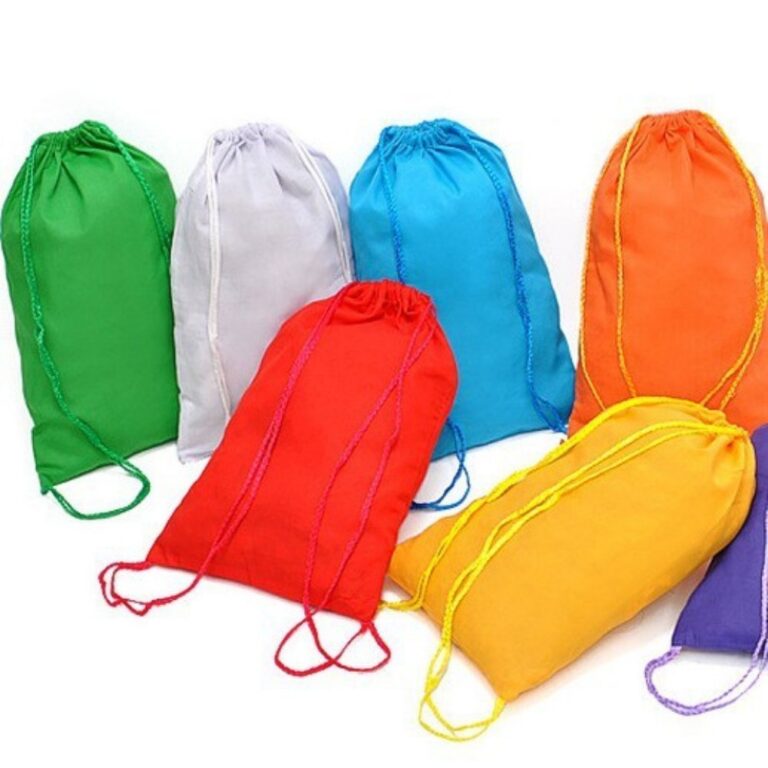
Shancheng’s catalogue includes a drawstring rucksack reference. Use its product link to identify the starting model, but treat the cord route as a separate confirmation item. A front photograph may show loose lengths without revealing what happens behind the fabric or inside a top channel. It does not establish the number of separate cords, the internal channel arrangement, or the method used at a lower attachment.
Give the supplier an annotated copy of the selected reference. Mark the front, reverse and top opening so that left and right have a shared meaning. If your team uses a second photograph, identify it as another view of the same sample or as a different model. Mixing two attractive catalogue views without resolving model identity can create a specification that neither photographed bag actually represents.
Ask for a path drawing that resolves hidden sections
The useful drawing follows a continuous path. Ask the supplier to show where a cord enters a channel, where it leaves, and where an end returns or attaches. Hidden sections can be shown with a different line style. Assign simple names to each cord rather than relying on colour, since the final order may use a different cord colour. The purpose is to make the assembly understandable to another person reviewing the sample.
Keep route and cord dimensions on separate lines. A routing agreement does not confirm cord diameter, exposed length, channel width or finished bag size. Request a measuring method before adding those values to an order. If the catalogue supplies no applicable dimensions, leave the fields open for a supplier proposal. Do not estimate a production measurement from the proportions of the photograph.
Compare the information each reference actually supplies
Use the table to request missing information, not to reject a quotation because it uses a different document format. A clear marked photograph may answer an uncomplicated routing question. A more involved arrangement may need an additional drawing. What matters is whether a reviewer can trace the route and relate it to the quoted item without filling in gaps from experience.
Reference | What it can clarify | What still needs confirmation
Front photograph | Visible exits and external arrangement | Hidden route and reverse attachment
Marked path drawing | Continuity and position of each cord | Finished measurements and material declaration
Opened sample view | Channel openings and end treatment | Repeatability in the quoted production version
Approved physical sample | Agreed assembly and supplied state | Any later requested variation
Separate attachment, end finishing and supplied state
Ask how each cord end is supplied: already secured, finished but unattached, or left for another assembly step. Request a close view of the actual attachment point and end treatment. These are different questions from the route itself. A knot shown in a reference photograph should not become an order instruction unless the supplier confirms that it belongs to the offered model and you accept it.
State whether your receiving team expects the bag to be ready to examine as an assembled item. If cords are supplied separately, ask how they are identified and packed with the correct bag. Avoid calling one supplied state equivalent to another merely because the same components are present. The receiving checklist should match the actual agreed state, including any threading or attachment work that remains.
Use a focused sample review instead of a general approval
When the sample arrives, compare its route with the marked reference before judging the overall appearance. Check each visible entry and exit in sequence, then review the reverse and top opening. Record any unresolved detail as a question with a photograph. A sample comment such as cord looks different is less useful than identifying the exact exit or end treatment that differs from the agreed drawing.
Keep acceptance of routing separate from claims about load, comfort, durability or suitability for an activity. Those claims need their own agreed requirements and evidence. This article’s routing check does not establish them. If a buyer needs a particular use claim, raise it explicitly with the supplier and review the supporting basis before it appears in purchasing documents or downstream product descriptions.
Freeze one route reference for the order
The final RFQ attachment should name the model, identify the marked route reference, and state the supplied condition. Ask the supplier to identify any difference between the sample and the version covered by the quotation. Keep unresolved fields visible rather than accepting silence as confirmation. A revised cord arrangement should receive a new reference so that an earlier approval cannot be mistaken for approval of the change.
For a reorder, send the previously accepted routing reference with the new inquiry and ask whether the quoted construction remains the same. Do not rely only on an old product name. If a new attachment or cord finish is proposed, review that change in its own right. This narrow record helps purchasing and receiving teams discuss the same assembly while leaving other product requirements to their appropriate approval documents.
• Label the front, reverse and top opening on the selected reference.
• Ask the supplier to mark each cord path and hidden section.
• Record the agreed supplied condition with the sample identity.
Frequently asked questions
Can a front photograph define the complete cord route?
Only if it genuinely shows every relevant part of the route. Hidden channel sections and reverse attachments usually need another identified view or an annotated drawing. Ask the supplier to resolve those parts rather than completing the route from assumption.
Should cord colour and route share one approval field?
Keep them separate. Route approval concerns where the cord travels and attaches; colour approval concerns the appearance of the selected cord. Either can change without the other, so each should be traceable to the same quoted model.
Does route approval confirm a carrying capacity?
No. It records the agreed assembly reference. Any carrying-capacity or performance requirement needs separate supplier confirmation and an appropriate evidence basis before the buyer adopts that claim.
Product and contact references
Selected product reference: https://shanchengbag.com/product/shancheng-in-stock-polyester-backpack-drawstring-rucksack-for-cycling-hiking-travel-amp-storage-unisex/
Contact the supplier: https://shanchengbag.com/contact/
Shancheng blog: https://shanchengbag.com/blog/